
The International Peatland Society launched World Peatlands Day in 2019 to raise awareness and celebrate peatlands. Peatlands are a type of wetland that occur worldwide, covering about 3% of Earth’s surface. Canada is home to around one fourth of peatlands, which cover 14% of the country’s landmass. Common names people use to refer to these ecosystems include bog, mire, fen, swamp, and muskeg.

Formation
Peatlands form when peat, made of partially decomposed plate matter, accumulates in a waterlogged area. This accumulation occurs due to conditions that high water saturation induces. Namely, less oxygen input occurs, which results in an anoxic (oxygen-deficient) environment. Reduced oxygen slows down plant matter decomposition rates. This is because decomposer organisms like bacteria require oxygen for effectiveness. This results in an excessive number of dead, undecomposed plant matter. Over time, this starts to form compact layers of the brown, soil-like material called peat.
Biodiversity
Peatlands have unique conditions that can influence the types of plants and animals within these environments. Specifically, peatland flora or fauna heavily depend on peatland location in boreal/temperate (northern) or tropical (southern) climates.
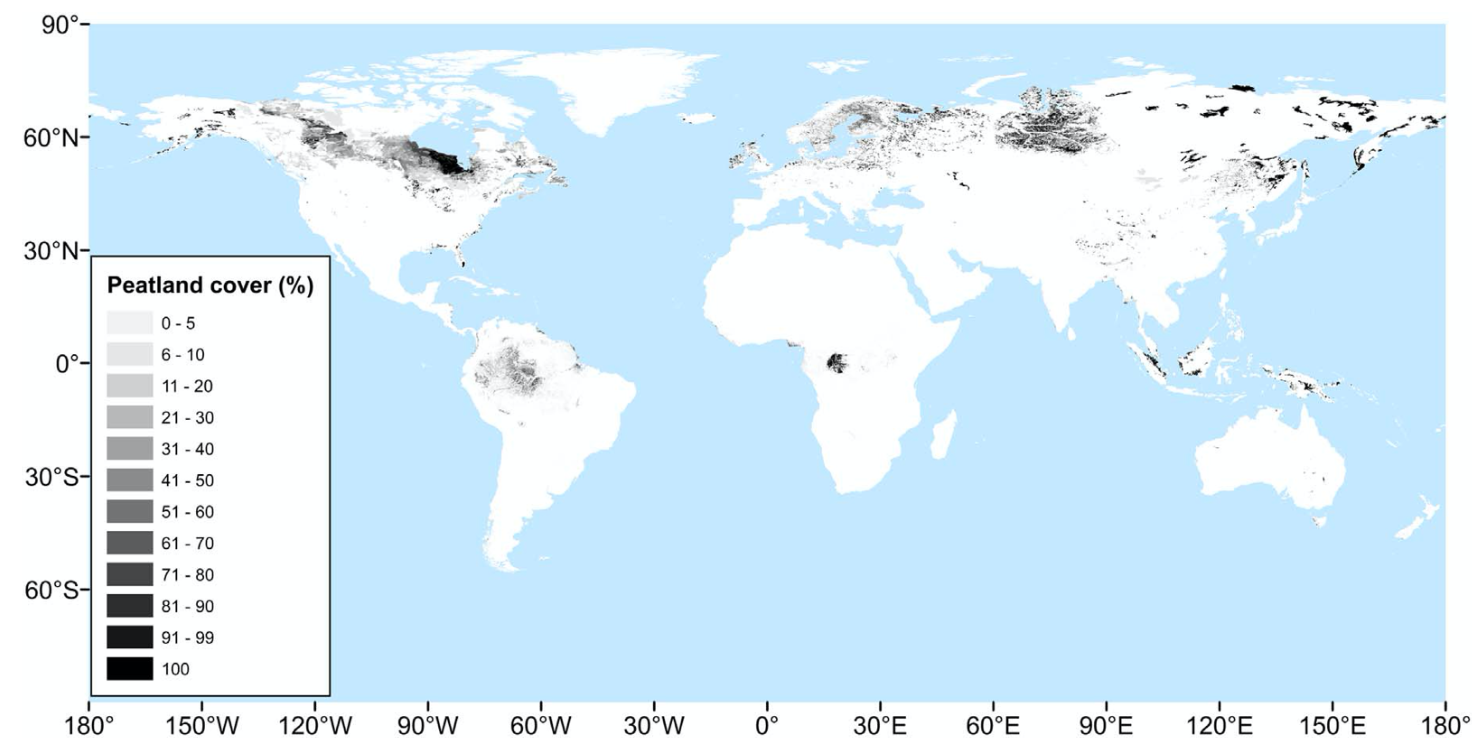
Global distribution of peatlands (International Peatland Society)
Tropical Peatlands
Tropical peatlands scatter the southern hemisphere. Southeast Asia is home to the largest areas of peatland, but they are also present in the Caribbean, Africa, and South America. Flora can vary depending on the region, but they typically form on woody and grass-like vegetation. Some notable, tropical peatland species include aguaje fruit-bearing palm trees of South America or the forest gorillas in Africa. Several bird species nest in peatlands. This includes one of the rarest passerine birds (songbirds), the Aquatic Warbler, in Asia and Europe.
Boreal and Temperate Peatlands
Canada, Europe and Russia are home to boreal and temperate peatlands. Sphagnum mosses, along with other species of moss and sedges, make up most of the peat layer. These mosses are keystone species in peatlands. This means that they play a vital role in the peatland ecosystem and heavily impact its structure. Living Sphagnum mosses, along with the peat layer, create a substrate for other plants to grow in. Several different species take advantage of this. Examples include carnivorous plants like sundews or pitcher plants, various fungi species, and lichens. Some animals that frequent peatlands include birds like swamp sparrows and Palm Warblers. Woodland caribou also frequent peatlands as they might choose to spend their winters nearby to eat lichens.

Sundews (family Droseraceae)
Ecological Importance
Aside from hosting a diverse range of flora and fauna, peatlands also benefit the environment in other ways. Peatlands store about 30% of the world’s terrestrial carbon. During peat formation, layers of plant material trap carbon dioxide which stops it from entering the atmosphere. Carbon dioxide is a greenhouse gas and a major contributor to global warming. Peatlands also help regulate water in the ecosystem. This helps to minimize risks of flooding, and the risks of seawater intrusion. Also, peatlands absorb heavy metals and pollutants from water and retain them while releasing cleansed water into the environment.
Threats and Conservation
Peatlands are under global threat due to the following human activities:
- Drainage for agriculture, infrastructure, and logging.
- Burning to clear land.
- Urbanization.
These peatland disturbances allow vast quantities of stored carbon to react with air and oxidize. This releases carbon dioxide into the atmosphere. Dried peatlands are also a huge wildfire risk. They release far more carbon dioxide than a typical fire due to their carbon storage. Also, once peat is no longer waterlogged, the plant matter starts to decompose. This releases carbon and reverses many years of peat accumulation. Building up just one millimeter of peat can take one full year.
Peatland conversation is a global effort. Some employed practices include:
- Establishment of protected areas.
- Restoring peatlands through rewetting.
- Active monitoring of peatlands using GIS and other technologies.
- Participating in education and awareness initiatives to teach the public about peatlands.

Great Egrets (Ardea alba), one of many birds protected under MBTA, at a peatland.
About the Author
Rebecca is a graduate of Memorial University of Newfoundland and holds a Bachelor of Science degree in Biology with a concentration in Applied Ecology and Conservation. Outside of academics she is also an avid birder and does wildlife photography.
 SCIFAA