
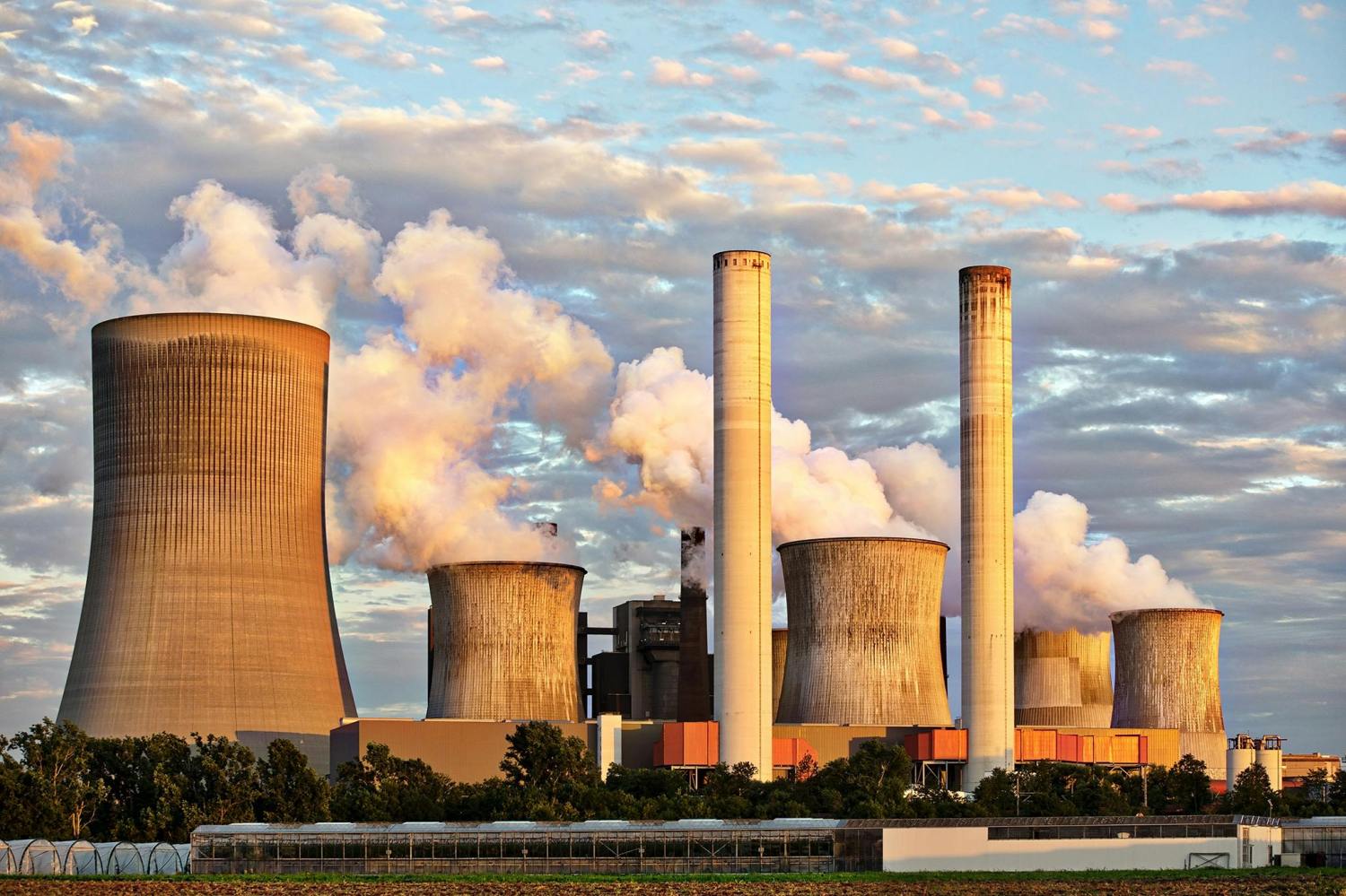
What is Air Quality?
Nothing beats a breath of fresh air in the morning. But that’s much harder to come by in some places than others due to differences in air quality.
The Air Quality Index measures air quality using a 0-500 scale that assesses the amount of air pollution (Hu, 2023). The concentration of pollutants like carbon monoxide and smoke determine whether air quality is good or bad (Wilson, 2023). Air quality is “good” when there are low levels of pollutants and “bad” when pollutant levels are high. The higher the number on the scale, the greater the health risk in the area. The weather app on your phone likely shows a section describing the health of the air in your neighbourhood.

(Air Quality Index Chart sourced from the US Environmental Protection Agency)
Poor air quality can create a range of health issues for people living nearby. Mild symptoms can include coughing and itchy eyes, but more serious cases can cause cardiovascular disease and cancer (Hu, 2023). It can also cause the air to smell like rotten eggs (MacDonald, 2024). Variations in air quality stem from both natural and human factors. For example, naturally occurring wildfires in British Columbia can seriously impact air quality (Hu, 2023). This is especially the case when wind blows smoke through populated areas (Hu, 2023). But by and large, most pollutants come from human sources (Wilson, 2023).
Ontario’s Chemical Valley
Sarnia, Ontario is currently experiencing extremely poor air quality due to human activity. The region is one of the most heavily industrialized in Canada (MacDonald, 2020). It accounts for about 40% of Canada’s total chemical industry (MacDonald, 2020). Industrial development took off after the Second World War, attracting factories like oil refineries and chemical plants (Graf, 2024). These facilities emit millions of kilograms of toxic chemicals every year (MacDonald, 2024). This makes it one of the worst pollution hotspots in Canada (MacDonald, 2024). As a result, residents and industrial workers face serious health risks. For example, the amount of airborne benzene is a particular concern because it causes leukemia (Graf, 2024). The high concentration of pollutants has earned the area its grim nickname: the Chemical Valley.

(An oil refinery located near Aamjiwnaang First Nation sourced from Carlos Osorio at The Narwhal)
The Role of Environmental Racism
One majorly affected group and strong advocate for Chemical Valley clean air is the Aamjiwnaang First Nation (pronounced: am-JIN-nun). The group resides on the South end of Sarnia. Aamjiwnaang is an Ojibwa word meaning “at the spawning stream” (Aamjiwnaang First Nation, 2025). The Aamjiwnaang First Nation consists of about 2,500 Chippewa Aboriginal people, about 900 living on reservations (Aamjiwnaang First Nation, 2025). The reservation closely neighbours most of the facilities creating the pollution (MacDonald & Rang, 2007). The group declared a state of emergency in April 2024 (McIntosh, 2025). It also recently signed an agreement with Environment and Climate Change Canada to address industrial pollution (McIntosh, 2025).
The government’s collaboration to address pollution in the region stems from a national effort to address environmental racism (McIntosh, 2025). Across Canadian history, there is a distinct trend of discrimination in environmental laws (Waldron, 2020). This places minorities at a greater risk of experiencing environmental hazards like pollution (Waldron, 2020). This pattern continues today. For example, many First Nation communities live without access to safe drinking water (Blackburn, 2024). Also, Wet’suwet’en (pronounced: Wet-so-wet-en) land defenders in British Colombia have a long history of protesting oil pipeline construction on their land due to the environmental risks (Simmons, 2024).

(Protest against a pipeline on Wet’suwet’en land sourced from Alberta Native News)
Recommendations From Clean Air Advocates
One key barrier to improving Chemical Valley air quality is the method used by the Ministry of Environment, Conservation, and Parks (MECP) to monitor air quality. Clean air advocates argue that the MECP assessed each facility as if it was the only one existing in the area (MacDonald, 2019). As such, the reporting did not accurately depict the impact of all facilities on the community. The MECP did expand their monitoring process in 2018 (MacDonald, 2019). However, critics argue the scope is too limited given that it only assesses two pollutants (MacDonald, 2019). It also fails to mandate industries to make real changes (MacDonald, 2019). Advocates argue that governments should more vigorously ensure facilities follow environmental standards and impose immediate consequences for violations (MacDonald & Rang, 2007).
How Can We Help?
Want to help Sarnians and members of the Aamjiwnaang First Nation fight for cleaner air? Try supporting Ecojustice, a non-profit organization partnered with the Aamjiwnaang First Nation to campaign for pollution reduction (Dino, 2024). You can support Ecojustice through donations or simply following them online to stay informed. Readers can also keep up with news, events, and calls to actions from Indigenous-led organizations. For example, the Assembly of First Nations is a national advocacy organization working to advance Indigenous rights (Assembly of First Nations, 2024).
Many Indigenous communities have a deep connection with the Earth and sustainably co-exist with their territories (Craig et al., 2020). Experts agree that we must meaningfully consider Indigenous leadership and knowledge to develop effective environmental policies (Nitah, 2021). The Aamjiwnaang First Nation’s role in shaping environmental laws is key for finally shedding the Chemical Valley of its nickname.
References
Aamjiwnaang First Nation. (2025). About Us. Aamjiwnaang First Nation. https://www.aamjiwnaang.ca/about-us/
Assembly of First Nations. (2024). Assembly Of First Nations Annual Report 2023–2024. Assembly of First Nations. https://afn.bynder.com/m/43e086a57efca382/original/2023-2024-Annual-Report.pdf.
Blackburn, M. (2024). AFN urges Parliamentarians to pass First Nations water law. APTN News. https://www.aptnnews.ca/national-news/afn-urges-parliamentarians-to-pass-first-nations-water-law/.
Craig, M.K., Moola, F., & Townsend, J. (2020). Indigenous Peoples are critical to the success of nature-based solutions to climate change. Facets, 5(1). https://doi.org/10.1139/facets-2019-0058.
Dino, A. (2024). Environmental group Ecojustice highlights severe pollution impact in Ontario’s Chemical Valley. Law Times News. https://www.lawtimesnews.com/practice-areas/environmental/environmental-group-ecojustice-highlights-severe-pollution-impact-in-ontarios-chemical-valley/384202.
Graf, C. (2024). A state of emergency in Ontario’s Chemical Valley. The Narwhal. https://thenarwhal.ca/sarnia-ontario-chemical-valley/.
Hu, S. (2023). What Is the Air Quality Index? Natural Resources Defense Council. https://www.nrdc.org/stories/what-air-quality-index.
McIntosh, E. (2025). Aamjiwnaang has been fighting environmental racism for decades. Now, the First Nation has an agreement to address it. The Narwhal. https://thenarwhal.ca/aamjiwnaang-sarnia-environmental-racism-pilot/.
MacDonald, E. (2019). Return To Chemical Valley – Ten years after Ecojustice’s report on one of Canada’s most polluted communities. Ecojustice. https://ecojustice.ca/wp-content/uploads/2019/06/Return-to-Chemical-Valley_FINAL.pdf.
MacDonald, E. (2020). Environmental racism in Canada: What is it, what are the impacts, and what can we do about it? Ecojustice. https://ecojustice.ca/news/environmental-racism-in-canada/.
MacDonald, E. (2024). Chemical Valley report shows dangerous impact of pollution. Ecojustice. https://ecojustice.ca/news/chemical-valley-report-shows-dangerous-impact-of-pollution/.
MacDonald, E., & Rang, S. (2007). Exposing Canada’s Chemical Valley – An Investigation of Cumulative Air Pollution Emissions in the Sarnia, Ontario Area. Ecojustice. https://ecojustice.ca/wp-content/uploads/2015/09/2007-Exposing-Canadas-Chemial-Valley.pdf.
Nitah, S. (2021). Indigenous peoples proven to sustain biodiversity and address climate change: Now it’s time to recognize and support this leadership. One Earth, 4(7). https://doi.org/10.1016/j.oneear.2021.06.015.
Simmons, M. (2024). Unravelling the complicated past of B.C.’s newest pipeline conflict. The Narwhal. https://thenarwhal.ca/prince-rupert-gas-transmission-history/.
Waldron, I. (2020). Environmental Racism in Canada. Canadian Commission for UNESCO. https://en.ccunesco.ca/-/media/Files/Unesco/Resources/2020/07/EnvironmentalRacismCanada.pdf.
Wilson, A. (2023). What is Air Quality and Why is it Important? ECO Canada. https://eco.ca/blog/what-is-air-quality/.
About the Author
Teke is a board member of GentleWays for OurPlanet, an Ottawa-based non-profit organization advocating for environmental sustainability and animal welfare. He has a strong passion for nature, music, and collecting Live Laugh Love décor.
 SCIFAA