

1. What is the name of the infectious disease that forced a global lockdown in 2020?
Answer: coronavirus disease (COVID-19). The World Health Organization (WHO) officially declared COVID-19 a pandemic on March 11, 2020.
2. Tuberculosis is an infectious disease that mainly affects which part of the body?
Answer: the lungs. Other parts of the body can be affected, too.
3. Which infectious disease is commonly referred to as “lockjaw?”
Answer: tetanus. It is caused by the bacterium Clostridium tetani.
4. True or false: measles is a contagious disease that can be fatal.
Answer: true. Fortunately, the MMR (measles, mumps, rubella) vaccine is 97% effective when two doses are administered! Even if a fully vaccinated patient contracts the illness, it will likely be much milder.
5. What year was polio declared officially eliminated from the western hemisphere?
Answer: 1991. This is credited to the Pan American Health Organization’s polio eradication program.
6. Which two continents mainly continue to report cases of Yellow Fever?
Answer: Africa and South America. Yellow Fever only occurs in tropical and subtropical regions, and can be contracted by travellers.
7. Which mosquito species commonly spreads the Zika virus?
Answer: the Aedes mosquito species. Infected mosquitos spread the virus when they bite a human being.
8. Shingles is caused by the same virus that causes which well-known infectious disease?
Answer: chickenpox. Both are caused by the varicella zoster virus (VZV).
9. Which age group is the most at risk of developing viral meningitis?
Answer: children under five years old.
10. Which animal is responsible for almost 99% of human rabies cases?
Answer: dogs. Rabies spread via scratches, bites, contact with open wounds, etc.
11. Which pandemic killed 50 million individuals across the globe, double the number of deaths linked to World War I?
Answer: the 1918 influenza virus. It is also called the Spanish flu.
12. Which bacterium caused the 14th century Bubonic Plague that killed over 25 million people?
Answer: Yersinia pestis. Swollen lymph nodes (buboes) caused by the plague reached the size of eggs!
13. What is the average fatality rate of the Ebola disease?
Answer: roughly 50%. It is caused by a hemorrhagic fever virus.
14. Which viral infection is also referred to as “break-bone fever?”
Answer: dengue fever.
15. True or false: it is impossible for you to develop chicken pox twice.
Answer: false. Although it is rare, it is possible.
16. Which disease that primarily affects children is referred to as “slapped cheek disease?”
Answer: fifth disease. This is because it induces a temporary bright red rash on a child’s cheeks!
17. Hand, foot and mouth disease (HFMD) is a super infectious viral disease which mostly affects which age group(s)?
Answer: babies and children under five. It is characterized by a blister-like rash that develops all over the body, including the hand, feet and mouth.
18. Which very common disease impacts nearly all children before they turn two years old?
Answer: roseola (aka sixth disease). The Royal Children’s Hospital Melbourne states that 95% of children are infected by two years old.
19. Cirrhosis is a condition defined by scarring and permanent damage to which part of the body?
Answer: the liver.
20. How many individuals in the United States suffer from the genetic disease, cystic fibrosis?
Answer: around 40 000. There are treatments available but no cure.
21. How many Canadians live with osteoporosis, a condition that causes bone thinning and increased risk of bone breakage?
Answer: more than 2.3 million Canadians.
22. Salmonella disease is named after which veterinarian who studied animal diseases?
Answer: Daniel E. Salmon. He worked for the U.S. Department of Agriculture.
23. How many Americans are expected to have Alzheimer’s disease by the year 2050?
Answer: almost 13 million.
24. Mumps is caused by a virus that affects which glands in the body?
Answer: the salivary glands. You can protect yourself from the mumps via vaccination.
25. True or false: there is no cure for Parkinson’s disease.
Answer: true. While there is no cure for Parkinson’s, exercise, medicine and surgery can help manage symptoms.
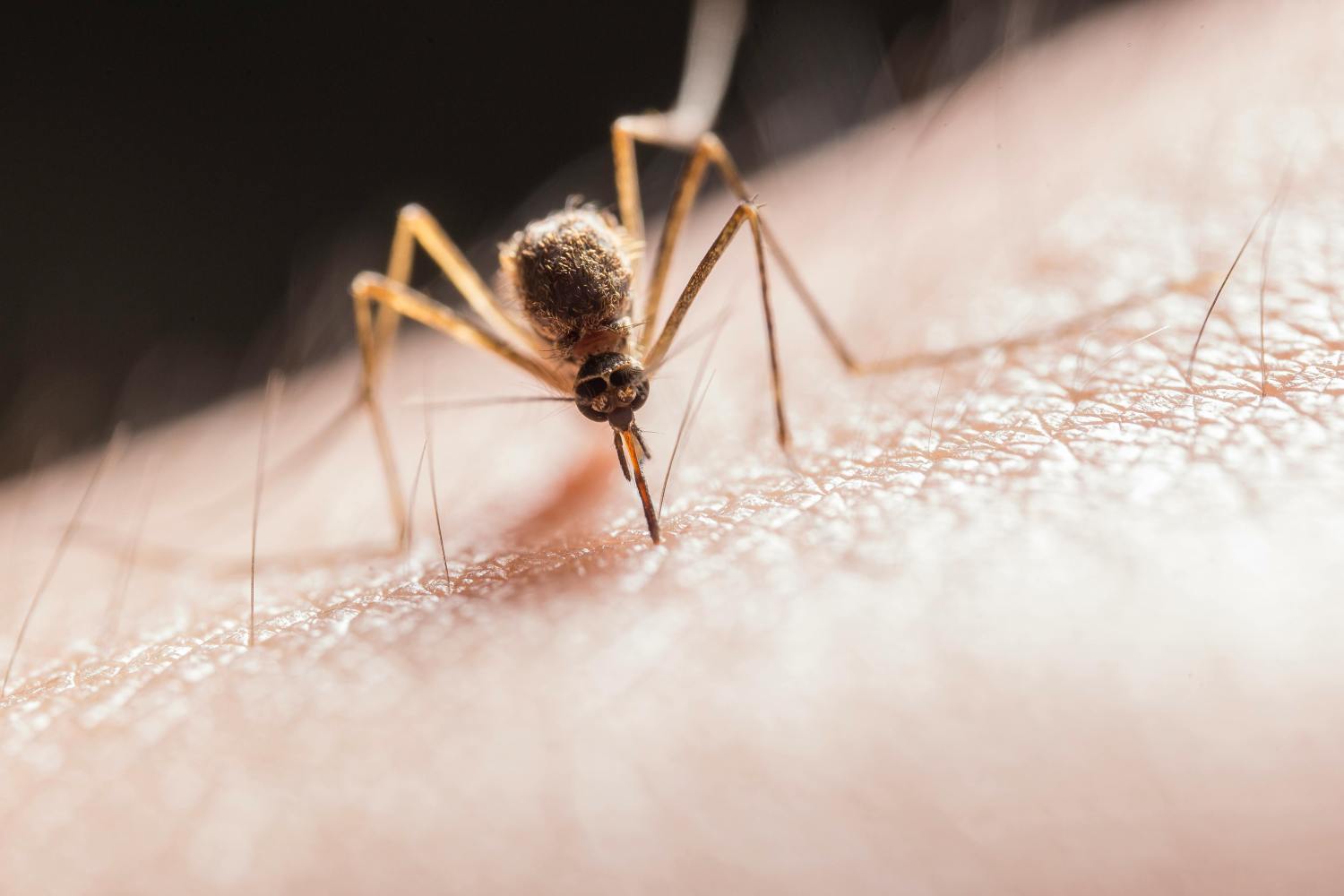
26. Malaria is responsible for how many infections across the globe each year?
Answer: 250 million infections! Malaria is endemic in 80 countries.
27. True or false: smallpox has been eradicated.
Answer: true. Small pox was officially eradicated in 1980.
28. Ataxia is characterized by damage to which part of the brain responsible for movement coordination?
Answer: the cerebellum. Ataxia patients have difficulty walking, lack of coordination, and impaired fine motor skills.
29. Which major noncommunicable disease is the most common chronic disease in children?
Answer: asthma. It is a chronic lung disease.
30. What is the common name – though medically inaccurate – for viral gastroenteritis?
Answer: the stomach flu. This infection impacts the intestines, not your stomach, and is not caused by flu (influenza) viruses!
31. What percentage of Huntington’s disease patients do not have a family history of the disease?
Answer: only 1-3%. Huntington’s is a genetic disorder passed on from parents to children.
32. What is the most common type of diabetes?
Answer: type 2 diabetes. This occurs when the body cannot produce or properly use insulin, a hormone produced in the pancreas.
33. What year was the first vaccine for whopping cough licensed in the Untied States?
Answer: 1914. Annual American cases of whopping cough dropped from 200 000 in the early 1900s to only 5000 in 2023.
34. What is the name of the bacteria that causes cholera?
Answer: Vibrio cholerae. You can get the disease by drinking contaminated water or by eating raw shellfish.
35. What is the name of the second most common form of dementia after Alzheimer’s?
Answer: Lewy body dementia. The protein deposits that develop in the brain’s nerve cells are called Lewy bodies.
36. Creutzfeldt-Jakob Disease (CJD) is a very rare disease that usually affects individuals between the ages of…?
Answer: 50 and 80. Only 350 Americans are diagnosed with CJD each year.
37. Hepatitis A is a contagious disease that affects which organ in the body?
Answer: the liver. Death from hepatitis A is pretty rare.
38. Groups the most at risk of developing bronchitis include individuals with health conditions, the elderly, and…?
Answer: young children. Bronchitis is temporary and usually gets better on its own.
39. If someone with strep throat develops a red rash all over the body, the sickness is now called…?
Answer: scarlet fever.
40. What percentage of Valley fever cases in the United States comes from the state of Arizona?
Answer: around 70%. Valley fever is caused by Coccidioides fungus found in soil in southwestern US, Mexico, Central America and Latin America.
41. What is the name of the Salmonella bacteria that causes typhoid fever?
Answer: Salmonella typhi.
42. How many Canadians are diagnosed with Invasive Pneumococcal Disease (IPD) each year?
Answer: around 3000. IPD can be dangerous, and lead to brain damage or death.
43. Hansen’s disease is also referred to as which disease?
Answer: leprosy.
44. Listeria is a foodborne illness named after which British surgeon?
Answer: Joseph Lister. He is credited with the discovery that surgical instruments should be sterilized before operations, to reduce infections.
45. Lyme disease is caused the bite of which insect, when it carries the borrelia bacteria?
Answer: a tick. The disease is common in the US, Canada, and Europe.
46. The West Nile Virus is named after the West Nile district in which country?
Answer: Uganda. This is where the virus was first identified.
47. Which cancer is the second-leading cause of cancer-related deaths among American men?
Answer: prostate cancer. Lung cancer is number one.
48. Which cancer is the second-leading cause of cancer-related deaths among American women?
Answer: breast cancer. Lung cancer is number one.
49. Lymphoma is a cancer caused by the uncontrolled growth of which type of cells?
Answer: white blood cells. These are called lymphocytes.
50. How many brain cells per minute can a stroke attack once it strikes?
Answer: as many as 1.9 million brain cells!
About the Author
Yasmin is a McMaster University graduate and Program Coordinator at SCIFAA. She holds a Bachelor of Applied Science in Sustainable Chemistry and a Minor in Environmental Sciences.
 SCIFAA