
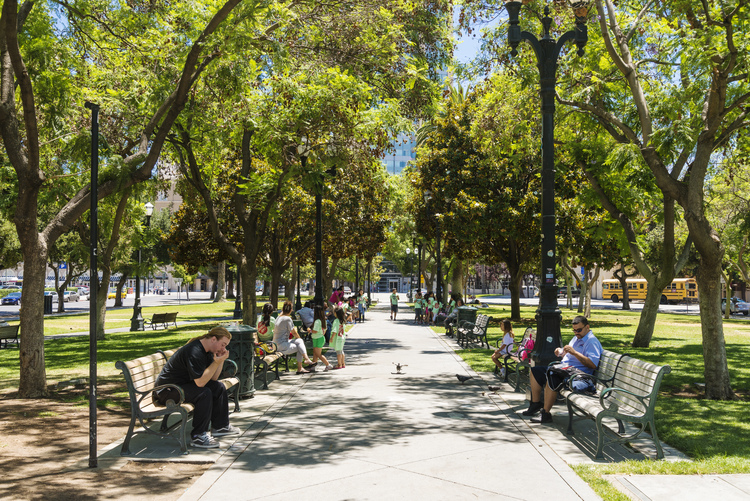
Can a neighborhood’s layout affect how active its residents are? For adolescents with type 1 diabetes (T1D), the answer to this is a lot more significant than you think.
Over 0.03% of adolescents under the age of 15 are diagnosed with T1D every year in Canada. However, adolescents with T1D are also at an even greater risk of developing cardiovascular disease. This emphasizes how important it is for children with T1D to develop a healthy lifestyle to prevent cardiovascular disease risks.
Importance of lifestyle behaviors in adolescence
Healthy lifestyle habits, like regular physical activity, good nutrition, and having enough sleep, are key to preventing cardiovascular disease. However, this does not just pertain to adults, but to adolescents as well. For children, especially 15-years-olds and under with T1D, these factors can help control blood pressure, blood glucose, and body fat levels.
Unfortunately, many adolescents, especially those with T1D, often do not meet the recommended levels of physical activity, nutrition, and sleep. This increases their risks of developing cardiovascular diseases.
Recent studies have highlighted how our neighborhood environments can either help or hinder healthy behaviors. Areas with walkable paths and parks, or access to healthy foods can encourage physical activity and healthy eating among individuals.
The study emphasized that children with T1D often have lower physical activity rates and fruit and vegetable intake. They also have higher screen times and screen durations.
By understanding these lifestyle behaviors and environmental factors, we can help make positive changes to the routines of adolescents with T1D. This ultimately creates a healthy and safe space to prevent future diagnosis of cardiovascular disease.
Summary of the study
The study investigated possible influences of neighborhood environments on healthy lifestyle habits among adolescents with T1D. The team compared the results to those without T1D, categorized as their health peers. Researchers collected 100 participants with T1D aged 14-18-years old from Montreal, and 97 healthy participants. They measured physical activity levels, screen time, diet and sleep duration to assess impacts of neighborhoods/environments on these habits.
The researchers categorized the neighborhoods into two groups: central urban and peri-urban. Central urban neighborhoods had higher population densities and more places of interest, like parks. They also had higher potential for social challenges like lower household incomes, compared to the more suburban-like peri-urban areas.
Researchers analyzed the relationship between neighborhood type and lifestyle habits, exploring whether these patterns differed between adolescents with T1D. The study aimed to unveil any lifestyle impacts linked to living in different neighborhood types.
How do urban environments promote physical activity?
T1D adolescents living in central urban neighborhoods showed higher levels of physical activity. The study provided evidence of this through higher daily minutes of exercise. Nonetheless, the differences in neighborhoods did not seem to impact screen time, sleep or diet, especially when comparing T1D and healthy participants. The suggests that urban environments might naturally encourage physical activity in adolescents.
Implications for public health and prevention
The study’s findings offer valuable insights for public health and urban planning. Neighborhood designs can directly impact levels of physical activity for T1D adolescents. Central urban neighborhoods seem to naturally encourage more active lifestyles among residents, given dense layouts, accessible parks and walkable destinations. Integration of urban designs with health-focused strategies can reduce long-term health risks of cardiovascular disease in T1D patients.
Designing neighborhoods with health is mind is not just about building infrastructure. It is about shaping futures and promoting healthy lifestyles. Investment in environments that encourage physical activity among adolescents can help reduce added risks of conditions higher in T1D adolescents.
References
Design for Walkability. (n.d.). SPUR’s Design for Walkability Initiative [Photograph]. SPUR. https://www.designforwalkability.com/
Syragakis, K. A., Henderson, M., Harnois-Leblanc, S., Barnett, T. A., Mathieu, M., Drapeau, V., Benedetti, A., & Hulst, A. V. (2024). Neighbourhood Environments and Lifestyle Behaviours in Adolescents with Type 1 Diabetes. Canadian Journal of Diabetes, 39(10), 139-140. https://doi.org/10.1016/j.cjca.2023.06.222
About the Author
Rhea Gupta is a fourth-year life science student at McMaster University and member of the McMaster Diabetes Association (MDA) VP Research Team. The McMaster Diabetes Association aims to improve awareness and end misinformation surrounding diabetes. Check out their Instagram here!
 SCIFAA