
We often think of green chemistry as something that happens in the lab. Catalysts to conserve energy and reactants. Closing fume hoods when not in use. Designing more efficient reaction pathways to reduce waste.
Yet, policy plays a significant role in supporting the adoption of green chemistry in industry, education, and by the public. In fact, the very field of green chemistry was conceived at the US Environmental Protection Agency. Through incentives to move away from/towards certain chemical practices, policy can motivate greener research, development and innovation. In short, chemical policy drives a demand for safer alternatives, while the science of green chemistry provides the solutions.
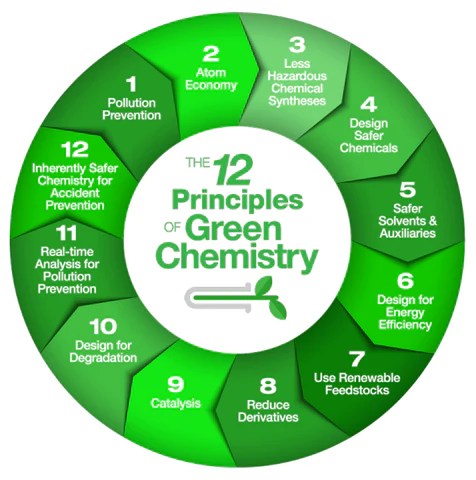
It is easy to confuse green chemistry with sustainable chemical policy, but policy follows the development of science. Advancements in green chemistry need improvements in existing processes. This could include using less hazardous reagents, reducing waste or using less energy. Green chemists must first invent a technology that can make a material or process greener. Chemicals policy can then be implemented to simplify the adoption of these practices. Thus when the green chemistry practices in the lab and chemicals policy that promotes green chemistry intersect, green chemistry advances.
Once these green chemistry practices are developed, a question comes to mind. How can we use policy to further the implementation of green chemistry beyond the lab? Poorly designed policies can serve as barriers to green chemistry and currently, green chemistry faces several challenges. Mainly, this includes a lack of green chemistry focused education and financial incentives to motivate the chemicals industry towards greener chemistry.

To bridge these gaps and advance green chemistry, we need increased collaboration between green chemists and policymakers. This will help to create policy that motivates industry investment in the design/production of green chemistry processes/materials. This will also allow an organized effort to integrate green chemistry into chemistry education to develop a well-equipped, chemical workforce.
References
Anastas, P.; Eghbali, N. Green Chemistry: Principles and Practice. Chem. Soc. Rev. 2009, 39, 301-312. DOI: 10.1039/B918763B
Cannon, A. S.; Warner, J. C. The Science of Green Chemistry and its Role in Chemicals Policy and Educational Reform. New Solutions. 2011, 21 (3), 499-517. DOI: 10.2190/NS.21.3.m
Jarvis, E. A. A. Green Chemistry in United States Science Policy. Green Chem. Lett. and Rev. 2019, 12 (2), 161-167. DOI: 10.1080/17518253.2019.1609599
Maxim, L. The Birth of Green Chemistry: A Political History. Science, Tech., & Human Values. 2023. DOI: 10.1177/01622439231203063
Tickner, J.; Giraud, R. The Role of Policy in Green Chemistry Research & Adoption. Presented at the Green Chemistry & Commerce CouncilGreen Chemistry Education Webinar Series. June 16, 2015.
About the Author
Maggie Wang was the 2023-2024 Social Media Executive for the Green Chemistry Initiative at the University of Toronto. To read more articles from the UoFT GCI, click here.
 SCIFAA