
Contact lenses are mainly used to correct eyesight issues like myopia (nearsightedness) and hyperopia (farsightedness). Have you ever wondered if contact lenses can be used for other purposes than correcting eyesight?
Intraocular pressure (IOP) is a term used to describe the fluid pressure inside of the eye. Measuring IOP is pretty routine in ophthalmic medicine. Despite the importance of these measurements though, patients do not have a way to measure IOP using on-demand products. There is an increasing demand for on-demand IOP monitoring. Thus, researchers at Nanjing University in China sought to develop hydrogel-based smart contact lenses for highly sensitive personal IOP monitoring.

These contact lenses fall into a top 10 emerging technologies category – wearable sensors.
Developing contact lenses that act as biosensors is difficult. This is because flexibility, view window, oxygen permeability and other factors must be considered. The Xu group created an on-demand IOP measurement system using a hydrogel with pHEMA (figure) as the lenses’ main polymer.

Figure 1. Structure of the polymer poly(2-hydroxyethyl methacrylate), otherwise known as pHEMA.
The decision to use pHEMA as the hydrogel polymer seemed ideal. It is highly tissue compatible and used widely in commercial contact lenses. Nonetheless, the challenge with pHEMA is that is is difficult to integrate the sensors directly into the hydrogel. Thus, the team resorted to creating the IOP device platform on the exterior surface.
This external system on the contact lenses is a complex sensor. It consists of three unique layers integrated with micropyramid elastomers to allow IOP measurements. As IOP increases, the eye’s cornea expands which elongates and stretches the pHEMA hydrogel layer of the contact lens. The amount of hydrogel stretching is detected by the sensor and turned into a signal detected by a nearby computer.

Figure 2. Layout of the structure of the smart contact lens. It consists of a micro pyramid elastomer integrated into three unique layers.
To improve the device’s portability, the team developed a pair of glasses with an adjustable reader. This allows for a remote signal measurement that enables users to measure IOP on the go.
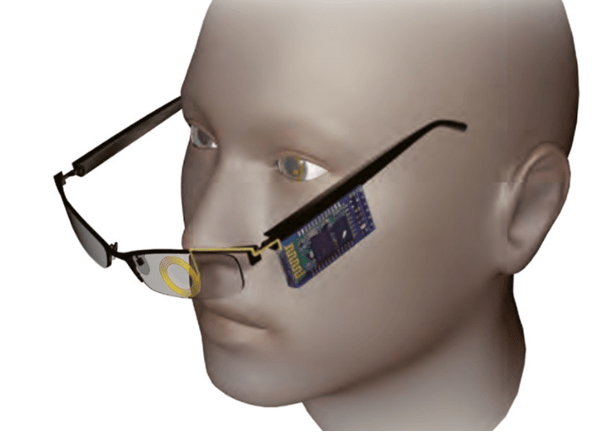
Figure 3. This an example of the respective pair of glasses. The glasses are embedded with a small computer chip and can be worn with the smart contact lenses.
Results acquired from pig model tests showed successful development and integration of IOP-monitoring sensors to create smart contact lenses. The device showed great sensitivity and reliability. Sensitivity for this device is especially important. Hydrogel deformation is microscopic, expanding or contracting only 0.03% per change in mmHg (the measured unit of IOP). As for reliability, calculations revealed mean deviation and standard deviation between measurements of 0.30 and 0.77 mmHg, respectively. This showcases an excellent reliability for the device. Also, the computer-embedded glasses functioned best at 14 mm from the contact lens, making glasses convenient for personal IOP analysis.
The smart contact lens shows the potential to bridge the gap between clinical and personal IOP measurements. Given the importance of self-monitoring IOP, the device in the right direction to promote daily ocular health management.
The finding of this work has been published in ACS Sensors: Zhu, H.; Yang, H.; Zhan, L.; Chen, Y.; Wang, J.; Xu, F. Hydrogel-Based Smart Contact Lens for Highly Sensitive Wireless Intraocular Pressure Monitoring. ACS Sens. 2022, 7 (10), 3014-3022.
About the Author

MUSCS
The McMaster Undergraduate Society for Chemical Sciences (MUSCS) is a student-run organization dedicated to enhancing the undergraduate experience for all McMaster University Chemistry & Chemical Biology Students. You can check out their Instagram page here.
 SCIFAA