
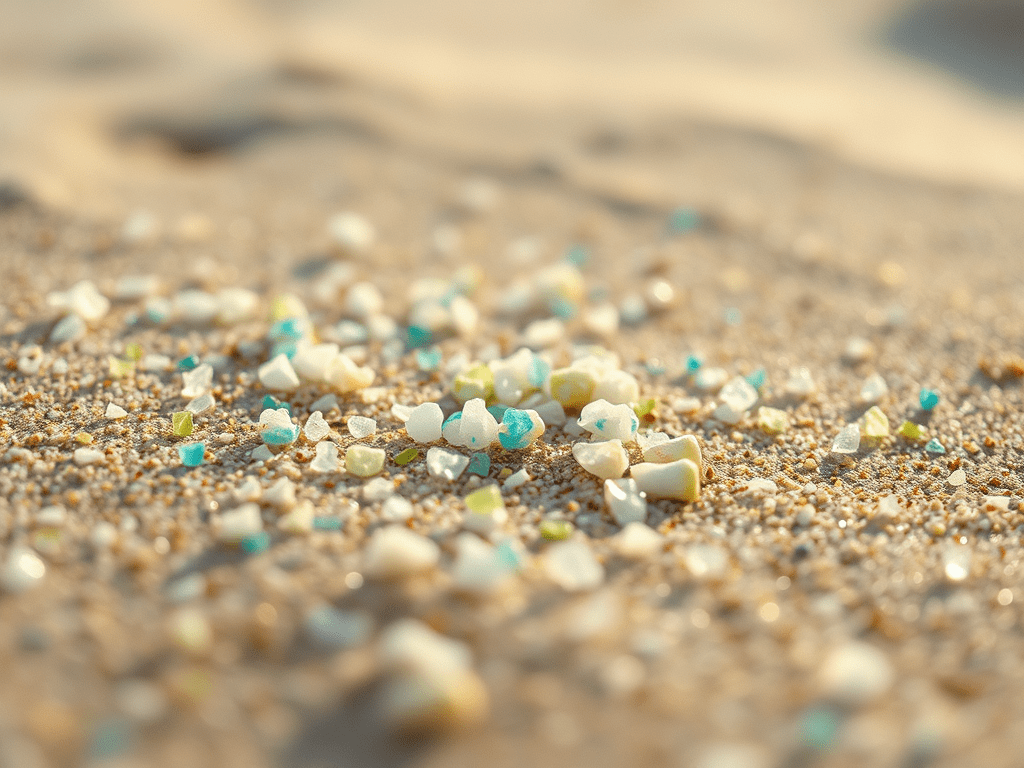
Plastics are a wide range of synthetic or semi-synthetic materials that use polymers as the main ingredient. These products are found in nearly every sector, like produce packaging, building and construction, textiles, consumer products, transportation, and electronics.
Nonetheless, this mass production of plastic products is leading to alarming levels of plastic waste. According to data, the world produces about 400 million tons of plastic waste each year. This waste can gradually decompose in the environment into microplastics (MPs) because of environmental and biological stresses. MPs are considered plastic fragments < 5 mm. Nanoplastics are <100 nm or 1 μm in size. MPs are resistant to chemical and biological degradation. These products can spread to various environments via wind and waves, since they’re small, lightweight, highly durable and highly stable.
More recent studies have emerged on the effects of MPs on aquatic organisms on different trophic levels. Traces of MPs have been detected in many aquatic species, including zooplanktons, mussels, fish, water birds and cetaceans. Interactions between MPs and wildlife can cause harm through entanglement, nutrition, deprivation or gut damage. For years, a comprehensive pattern of MP accumulation in wildlife is yet to be explained. There have been laboratory experiments on MP transfer from prey to predator across food webs (“trophic transfer”). Yet, there exists minimal evidence suggesting MP bioaccumulation or biomagnification through this transfer. It is believed that predators are at higher risk of MP bioaccumulation than lower level organisms in the food chain. This is assumed due to higher food and energy demands, and likelihood for MP transfer up the food chain. Nonetheless, a study on the Amazonian fish web revealed no differences among the guilds of carnivores, herbivores, and omnivores.
Rongliang Qiu and his team researched a former e-waste recycling site in a small village in South China. The study aimed to investigate the transfer of MPs in various wildlife taxa, like subtropical freshwater and terrestrial food webs.
The team collected multiple taxa of wildlife in the sample area and stored samples at −20 °C until further analysis. Isolation of the stomach contents and intestinal tissues of snails, fishes, snakes, birds and voles permitted analysis of MP abundance. The researchers incubated samples in potassium hydroxide and sodium chloride solutions, filtered using stainless steel filters, and washed with ethanol. A laser infrared imaging spectrometer allowed measurements to be taken of MP abundance and size, after the ethanol evaporated. The team did not include polyamide plastics in the study, because artificial polyamides are indistinguishable from natural ones.
The research showed median, MP abundance ranges in aquatic invertebrates (e.g., shrimp, crabs) and terrestrial invertebrates (e.g., snails) up to around 58 and 182 particles per individual, respectively. Fishes, snakes, birds and voles respectively showed median MP abundances up to 130, 132, 1250 and 171 particles per individual.
Birds, snakes, and voles showed similar ranges of MP abundances and weights, and higher levels than invertebrates or fishes. Samples did not show plastic sizes >500 μm. One reason can be the crushing of large pieces of plastics into smaller pieces in the gastrointestinal tract. Around 80% of MPs ranged from 20−50 μm in size and 10% ranged from 100−500 μm. The researchers identified 33 types of MP polymer types in the samples. The main identified polymer types included ACR, PE, PET, PU, SI and chlorinated polyethylene (CPE), detected in >50% of samples.
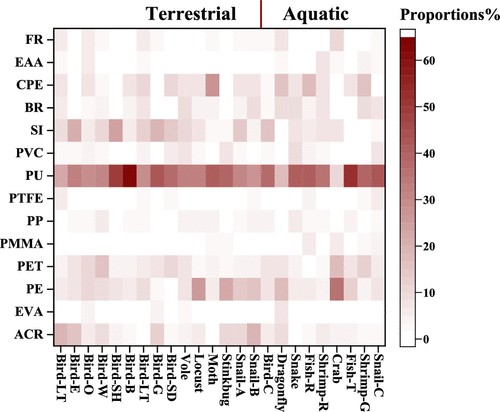
Figure 1. Composition of polymer types in organisms.
The authors came up with several conclusions based on the data. First, the study showed a greater abundance of smaller MP size ranges which agrees with other studies. This led the authors to suggest that a standardized method for identifying broadly sized MPs is needed. This can fix the inability to detect particles <50 μm in size. Another discovery is that generally, birds, voles and snakes show higher abundances of MPs per individual than fishes and invertebrates. The research proved the assumption that more weight indicates greater food consumption, lower GI tract retention, and higher MP exposure. This is comparison to lesser weight findings. Finally, the team plotted the log-transformed abundance of MPs in food woods against 13C and 15N. Both 13C and 15N are stable isotopes. The researchers aimed to determined whether the two can be indicators of MP pollution. Abundance of MPs per individual positively but not significantly correlated with 13C values in organisms (p > 0.05). Higher 13C values show more proportions of aquatic food sources and lower MP exposure risks for terrestrial predators.
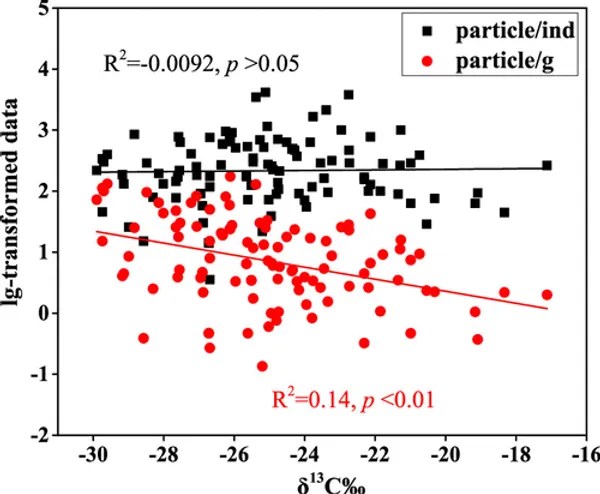
Figure 3. Relationships between 13C and log-transformed abundances of microplastics expressed as particles/individual and particles per gram in terrestrial organisms.
It is hard to decide whether MP is an adsorbent or a source of organic pollutants in the gastrointestinal tract of organisms. Nonetheless, the research identified a low amount of MP abundance in bird species compared to the levels of food ingested. This suggests that MP contribute negligibly to bioaccumulation of chemical pollution.
The finding of this work has been published on Environmental Science & Technology: Zheng, X.; Wu, X.; Zheng, Q.; Mai, B. X.; Qiu, R. Transfer of Microplastics in Terrestrial and Aquatic Food Webs: The Impact of E-Waste Debris and Ecological Traits. Environ. Sci. Technol. 2022, 57, 1300–1308. https://doi.org/10.1021/acs.est.2c06473
About the Author

MUSCS
The McMaster Undergraduate Society for Chemical Sciences (MUSCS) is a student-run organization dedicated to enhancing the undergraduate experience for all McMaster University Chemistry & Chemical Biology Students. You can check out their Instagram page here.
 SCIFAA